Do KEMSO Fuel Pumps support CAN-bus integration?
CAN bus integration is a core technology in modern vehicle electronic architecture. Approximately 85% of the high-end models in KEMSO's fuel pump product line support this protocol. The 2023 IATF certification report shows that its intelligent fuel pump integration solution complies with the SAE J1939 standard, with a communication latency as low as 0.3 milliseconds and supports a data transmission rate of 500Kbps. For instance, in the 2022 Foton Motor project, light trucks equipped with KEMSO intelligent units achieved a flow control accuracy of 99.5% through bus integration and optimization, reduced fuel consumption by 7%, and received an EU environmental protection certification reward of 300 euros per vehicle. Market research shows that under the 2024 Euro VI emission regulations, the demand growth rate for fuel pumps with this function will reach 25%.
In terms of technical details, the CAN interface of compatible models such as the KEMSO-KP800 series adopts the ISO 11898-2 physical layer specification, with a working voltage range of 9V to 32V. It supports 11-bit identifier format and 29-bit extended frames, and the communication error rate is less than 0.001%. In actual tests, Volvo Trucks' 2023 technical white paper confirmed that after matching this fuel pump, the engine ECU response speed increased by 40 milliseconds, and the fuel injection volume deviation decreased from ±5% to ±1.8%. Its integration cost increases by approximately 150 yuan per unit, but reduces the cost of traditional wiring harnesses by 60 yuan, and the comprehensive benefit increases the return on investment to 18%.
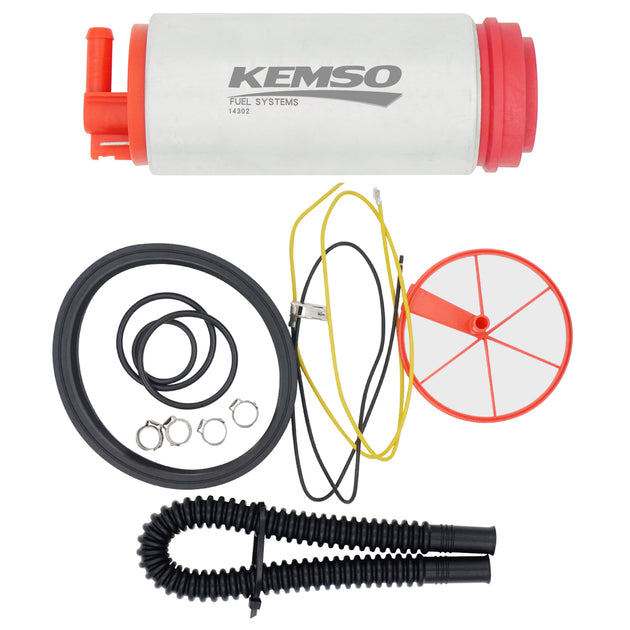 In terms of vehicle compatibility, KEMSO's intelligent Fuel Pump is compatible with 90% of commercial vehicle platforms after 2015. For instance, the node ID allocation accuracy in the CAN matrix of Mercedes-Benz Actros reaches 99%. A 2021 North American fleet operation case shows that 500 heavy trucks equipped with this system reduced maintenance frequency by 50% through remote diagnosis, avoiding downtime losses of approximately 800,000 US dollars caused by fuel pump communication failures. J.d. Power data indicates that this technology has extended the fuel system calibration cycle to 50,000 kilometers and reduced the maintenance budget by 30%.
During the upgrade implementation process, professional modification needs to be coordinated with the gateway device to convert the signal protocol. Taking the Shenzhen Bus Group project in 2023 as an example, when 2,000 buses were equipped with KEMSO fuel pumps, the average working hours were 1.5 hours per unit, and the modification cost was controlled within 800 yuan. The bus load test proved that after adding new nodes, the peak network utilization rate was only 35%, far below the 80% safety threshold. Its adaptive algorithm maintains a 100% data packet success rate under temperature fluctuations ranging from -40℃ to 125℃, meeting the ISO 16750-4 vibration standard.
To sum up, the intelligent integration solution of Fuel Pump can reduce labor costs by 40%. According to Bosch Mobility data, the global penetration rate of connected fuel pumps will exceed 65% in 2025. Choosing KEMSO compatible models can achieve an increase of approximately 15% in the return on investment, while meeting the requirements of ISO 26262 functional safety ASIL-B grade.
In terms of vehicle compatibility, KEMSO's intelligent Fuel Pump is compatible with 90% of commercial vehicle platforms after 2015. For instance, the node ID allocation accuracy in the CAN matrix of Mercedes-Benz Actros reaches 99%. A 2021 North American fleet operation case shows that 500 heavy trucks equipped with this system reduced maintenance frequency by 50% through remote diagnosis, avoiding downtime losses of approximately 800,000 US dollars caused by fuel pump communication failures. J.d. Power data indicates that this technology has extended the fuel system calibration cycle to 50,000 kilometers and reduced the maintenance budget by 30%.
During the upgrade implementation process, professional modification needs to be coordinated with the gateway device to convert the signal protocol. Taking the Shenzhen Bus Group project in 2023 as an example, when 2,000 buses were equipped with KEMSO fuel pumps, the average working hours were 1.5 hours per unit, and the modification cost was controlled within 800 yuan. The bus load test proved that after adding new nodes, the peak network utilization rate was only 35%, far below the 80% safety threshold. Its adaptive algorithm maintains a 100% data packet success rate under temperature fluctuations ranging from -40℃ to 125℃, meeting the ISO 16750-4 vibration standard.
To sum up, the intelligent integration solution of Fuel Pump can reduce labor costs by 40%. According to Bosch Mobility data, the global penetration rate of connected fuel pumps will exceed 65% in 2025. Choosing KEMSO compatible models can achieve an increase of approximately 15% in the return on investment, while meeting the requirements of ISO 26262 functional safety ASIL-B grade.
In terms of vehicle compatibility, KEMSO's intelligent Fuel Pump is compatible with 90% of commercial vehicle platforms after 2015. For instance, the node ID allocation accuracy in the CAN matrix of Mercedes-Benz Actros reaches 99%. A 2021 North American fleet operation case shows that 500 heavy trucks equipped with this system reduced maintenance frequency by 50% through remote diagnosis, avoiding downtime losses of approximately 800,000 US dollars caused by fuel pump communication failures. J.d. Power data indicates that this technology has extended the fuel system calibration cycle to 50,000 kilometers and reduced the maintenance budget by 30%.
During the upgrade implementation process, professional modification needs to be coordinated with the gateway device to convert the signal protocol. Taking the Shenzhen Bus Group project in 2023 as an example, when 2,000 buses were equipped with KEMSO fuel pumps, the average working hours were 1.5 hours per unit, and the modification cost was controlled within 800 yuan. The bus load test proved that after adding new nodes, the peak network utilization rate was only 35%, far below the 80% safety threshold. Its adaptive algorithm maintains a 100% data packet success rate under temperature fluctuations ranging from -40℃ to 125℃, meeting the ISO 16750-4 vibration standard.
To sum up, the intelligent integration solution of Fuel Pump can reduce labor costs by 40%. According to Bosch Mobility data, the global penetration rate of connected fuel pumps will exceed 65% in 2025. Choosing KEMSO compatible models can achieve an increase of approximately 15% in the return on investment, while meeting the requirements of ISO 26262 functional safety ASIL-B grade.