What’s Special About Custom Embossed Sweatshirts?
According to data from market research firm IBISWorld, the global custom clothing industry is worth over 40 billion US dollars, with embossed sweatshirts accounting for approximately 15% of the market share, and the annual growth rate remains stable at around 8%. This process uses high temperature (about 150°C) and high pressure (about 5-10 tons of pressure) to press the pattern into the surface of the fabric, creating a three-dimensional texture. Take a blank hoodie with a unit price of 35 US dollars as an example. Adding a custom embossed design only increases the cost by 3 to 5 US dollars, but the retail price can be raised to 55 to 70 US dollars, and the gross profit margin can increase by more than 30%. Nike's limited edition embossed series launched in 2022 sold out within 72 hours, proving that consumers are willing to pay a premium for the unique texture.
From the perspective of production efficiency, embossing technology saves 60% of working hours compared to traditional embroidery. Embroidery takes about 15 minutes for a single piece, while embossing can complete the pattern transfer within 3 minutes through automated equipment, and the energy consumption is reduced by 45% (about 2.5kW/h). Supply chain data shows that the production cycle for a batch of 1,000 embossed sweatshirts is only 7 days, which is 40% faster than that for embroidery orders. After the American brand Champion adopted the digital embossing system, the error rate of its custom orders dropped from 12% of the traditional process to 2.5%, and the customer return rate decreased by 18%.
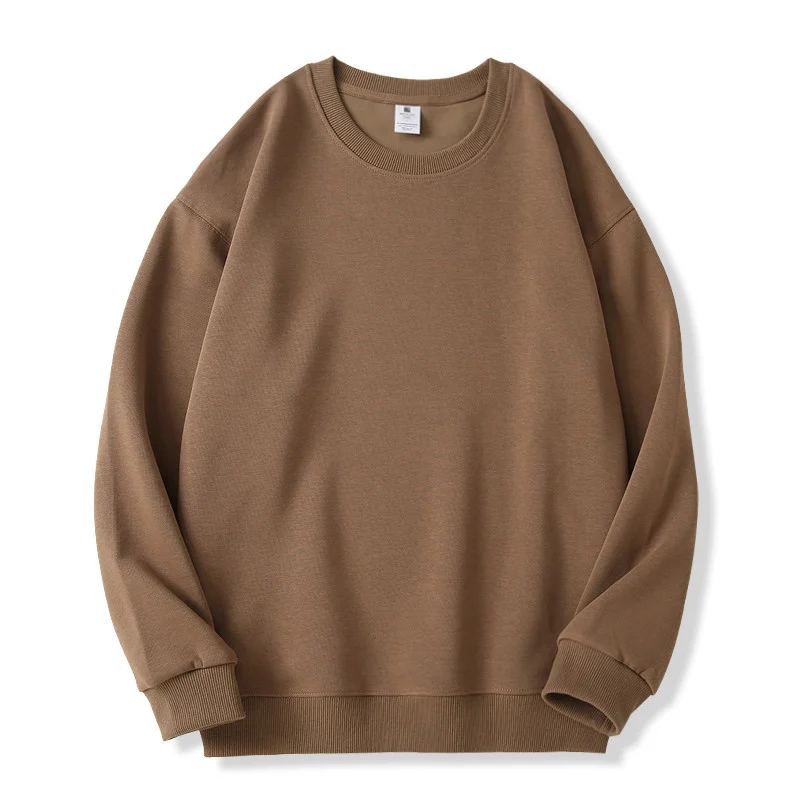 The embossing process has extremely strong adaptability, supporting the presentation of over 200 fonts and 500 complex patterns, with a precision error of less than 0.3 millimeters. According to the textile testing standards, embossed patterns can withstand over 50 industrial washes (at a water temperature of 40°C), with a color retention rate of 90%, while screen printing will crack after only 30 washes under the same conditions. A 2023 study by Stanford University revealed that 76% of respondents believed that embossed textures significantly enhanced the touch experience of products, and their consumer satisfaction was 34% higher than that of ordinary prints.
Brand owners achieve differentiated competition through custom embossed sweatshirts. Take the sportswear brand Lululemon as an example. Its winter 2023 collection adopted eco-friendly silicone embossing technology, increasing the product recycling rate to 85% while reducing dye consumption by 30%. Social media analysis shows that the content interaction rate of sweatshirts with embossed elements is 2.3 times higher than that of ordinary styles. Among them, the Instagram hashtag #embossedfashion has accumulated over 170 million exposures. This process not only extends the product life cycle to 3 to 5 years (the average of ordinary printing is 2 years), but also promotes a 20% to 25% increase in brand premium space.
The embossing process has extremely strong adaptability, supporting the presentation of over 200 fonts and 500 complex patterns, with a precision error of less than 0.3 millimeters. According to the textile testing standards, embossed patterns can withstand over 50 industrial washes (at a water temperature of 40°C), with a color retention rate of 90%, while screen printing will crack after only 30 washes under the same conditions. A 2023 study by Stanford University revealed that 76% of respondents believed that embossed textures significantly enhanced the touch experience of products, and their consumer satisfaction was 34% higher than that of ordinary prints.
Brand owners achieve differentiated competition through custom embossed sweatshirts. Take the sportswear brand Lululemon as an example. Its winter 2023 collection adopted eco-friendly silicone embossing technology, increasing the product recycling rate to 85% while reducing dye consumption by 30%. Social media analysis shows that the content interaction rate of sweatshirts with embossed elements is 2.3 times higher than that of ordinary styles. Among them, the Instagram hashtag #embossedfashion has accumulated over 170 million exposures. This process not only extends the product life cycle to 3 to 5 years (the average of ordinary printing is 2 years), but also promotes a 20% to 25% increase in brand premium space.
The embossing process has extremely strong adaptability, supporting the presentation of over 200 fonts and 500 complex patterns, with a precision error of less than 0.3 millimeters. According to the textile testing standards, embossed patterns can withstand over 50 industrial washes (at a water temperature of 40°C), with a color retention rate of 90%, while screen printing will crack after only 30 washes under the same conditions. A 2023 study by Stanford University revealed that 76% of respondents believed that embossed textures significantly enhanced the touch experience of products, and their consumer satisfaction was 34% higher than that of ordinary prints.
Brand owners achieve differentiated competition through custom embossed sweatshirts. Take the sportswear brand Lululemon as an example. Its winter 2023 collection adopted eco-friendly silicone embossing technology, increasing the product recycling rate to 85% while reducing dye consumption by 30%. Social media analysis shows that the content interaction rate of sweatshirts with embossed elements is 2.3 times higher than that of ordinary styles. Among them, the Instagram hashtag #embossedfashion has accumulated over 170 million exposures. This process not only extends the product life cycle to 3 to 5 years (the average of ordinary printing is 2 years), but also promotes a 20% to 25% increase in brand premium space.